Blog

Fox News makes an anti-Obama attack ad: How production value impacts perception

Take a moment to watch this video:

Entitled “Four Years of Hope and Change,” you get dramatic visuals and music – a greatest hits of Barack Obama’s first term as president. Well, if you didn’t like the guy, anyway.

The facts seem to be fine from a cursory glance. It would be an excellent creation of the Romney campaign or some political action committee. Thing is, it wasn’t a creation of a blatant activist group. It was produced by Fox News and ran multiple times Wednesday on its morning infotainment program Fox & Friends.

Continue reading “Fox News makes an anti-Obama attack ad: How production value impacts perception”

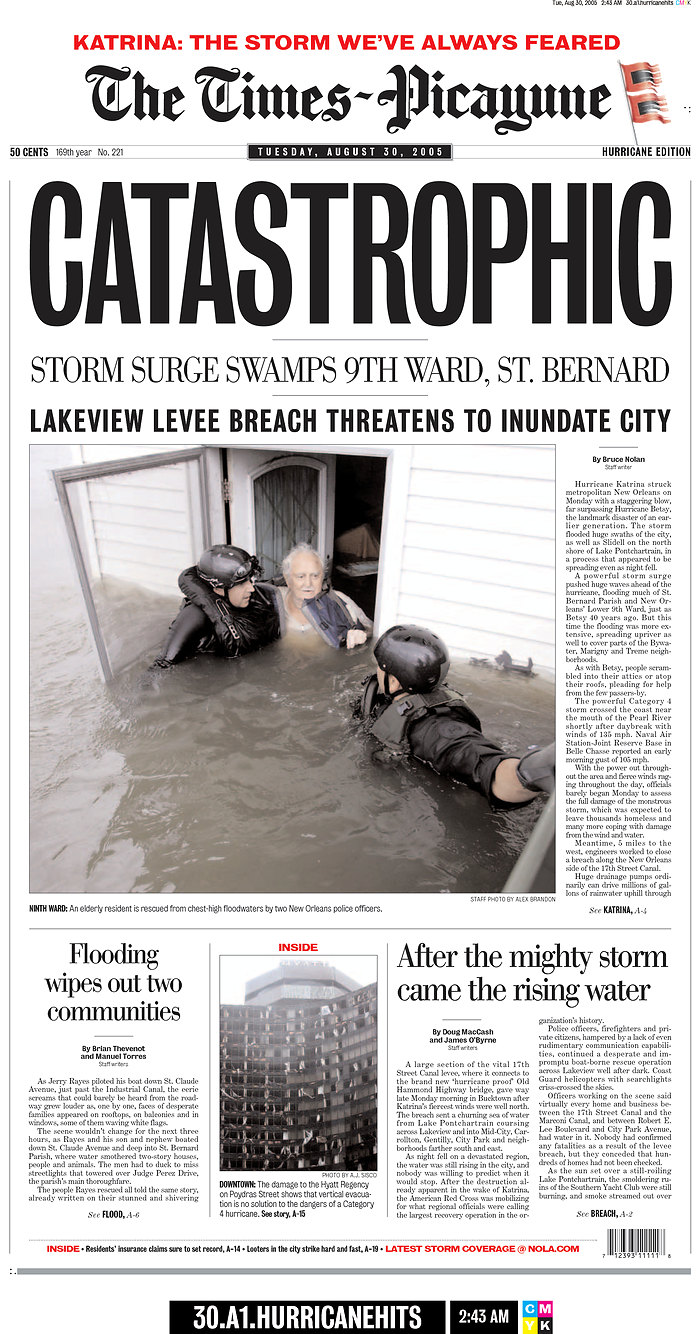
Times-Picayune, part of New Orleans culture, scaling back; Alabama papers hit, too

Today is another in an almost decade-long line of sad days for the newspaper industry. Ownership of the New Orleans Times-Picayune announced Thursday that the newspaper will cut its print distribution to three days a week and shift resources to its website, NOLA.com. By the end of the afternoon, three more dailies in Alabama had been similarly downsized.

This is not just another small newspaper trimming down, or a competing paper in a large city getting out of the print business. With a daily circulation of over 150,000, the Times-Picayune is the largest newspaper to scale back printing dates and New Orleans is now the largest city in America without a daily newspaper, according to Poynter.

The move is part of a larger strategy for the newspaper’s ownership group, Advance Publications (often referred to as Newhouse, after the family that owns the company). Hours after the Times-Picayune news, Advance announced the same print schedule for the Birmingham News, Press-Register of Mobile, and the Huntsville Times – leaving three of the state’s four largest cities without a daily newspaper. The Alabama newspapers will place more emphasis on AL.com. Advance also recently consolidated a number of their Michigan newspapers and decreased printing days, eliminated home delivery, or took both measures in various markets.

The new NOLA Media Group promised more intensive online news-gathering “24 hours a day, seven days a week,” and feature-heavy print editions on Wednesday, Friday, and Sunday – “the most valuable days for the newspaper’s advertisers,” said NOLA’s president Ricky Matthews in the group’s official release Thursday morning.

Continue reading “Times-Picayune, part of New Orleans culture, scaling back; Alabama papers hit, too”

The last of the baseball card collectors

It was early Sunday morning. I grabbed some raisin bread and a banana and sat down in front of the television. Nothing prepares me for church like listening to people bicker about politics. But instead of meeting the press, I stumbled upon a piece on CBS that sent me down memory lane to old warehouses and hotel conference rooms, digging through dingy cardboard boxes, looking for loot to add to the oversized green plastic box I stored my treasures in until I grew old enough to realize how silly it looked to carry with me.

Some were colorful and metallic, others clean and crisp. Some were cut with the precision of a laser, others embossed, others glossed. There were the Diamond Kings and the diamonds in the rough, but it took mining the entire field to find all of the gems. And if you were lucky, you’d find the one that came with a stick of chewing gum.

Vodpod videos no longer available.

Continue reading “The last of the baseball card collectors”

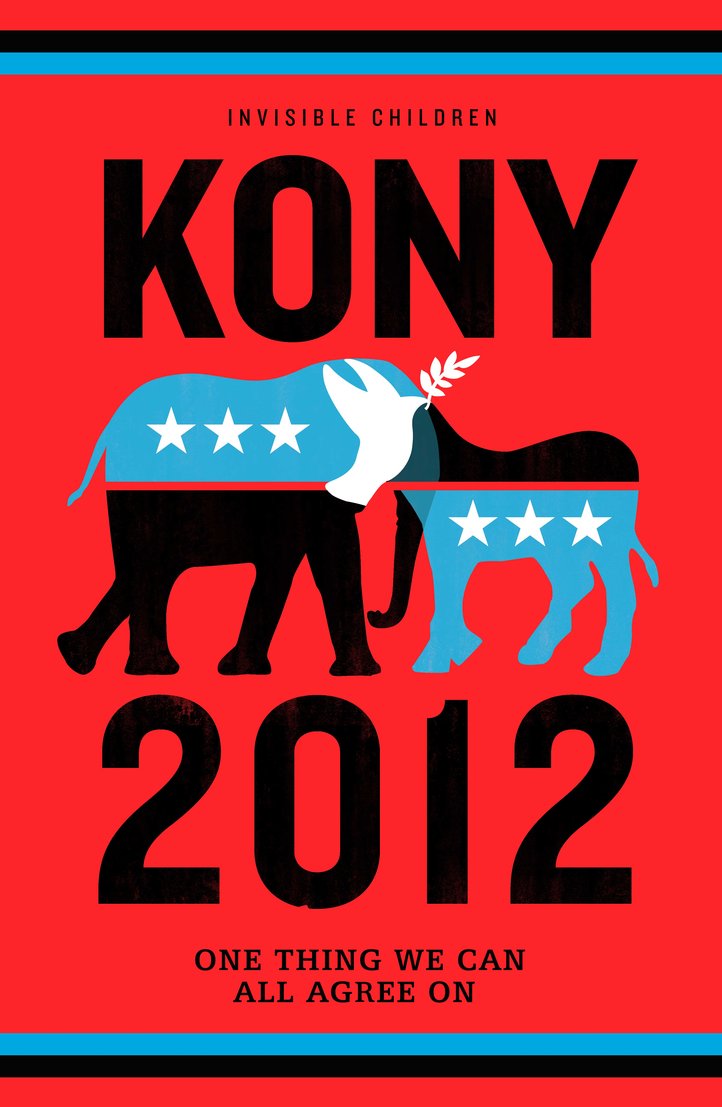
KONY 2012: Awareness and accuracy; Idealism and cynicism

Joseph Kony is an evil man. But are the people who likely made you aware of him in the first place even worse? Over the course of just a few days, the world responded to the message of Invisible Children’s short film, Kony 2012, then shot the very messenger that brought them the news. And by the end of it all, at least one man was naked on a street corner.

It was a unique event.

The video itself was the eleventh by Invisible Children, and even in its short lifespan, the most effective. As of the writing of this post – three weeks after the video’s release – Kony 2012 had been viewed over 100 million times on YouTube and Vimeo. MSNBC wrote in greater detail about how the video went viral, while the Chronicle of Philanthropy provided a more philosophical, yet briefer account.

So, Kony 2012 was achieving its goal – to make Joseph Kony famous. There is no denying that the world is now more aware of the man than before the campaign. However, in the process of making Kony famous, Invisible Children too became noteworthy, and when one attracts a certain amount of attention, it is only a matter of time before a critical lens is applied.

Continue reading “KONY 2012: Awareness and accuracy; Idealism and cynicism”

NASCAR’s Keselowski sets Twitter on fire

I watched my first NASCAR race in at least five years Monday night. By early Tuesday morning, Matt Kenseth had won the Daytona 500.

No one cared about that.

It was a weekend full of rain, and when the race finally started, it might as well have kept on pouring to save us from endless laps of drivers laying back and playing it safe.

Then, Juan Pablo Montoya crashed into a jet dryer during a caution, sending gallons of jet fuel pouring down the steep bank of turn three. Whole thing caught on fire. Big fire. During the two-hour red flag, we endured the FOX broadcast team’s filler antics and learned a new use for Tide laundry detergent.

Meanwhile, Brad Keselowski, relatively unknown driver of the #2 Miller Lite Dodge, was sending this Tweet – an in-car view of the fire on the track. Keselowksi had his phone with him in his car, and during the red flag stoppage, took to Twitter… a lot.

Keselowski Tweeted 39 times over the next two hours. When the race finally resumed, he fell victim to one of many wrecks in those final 40 laps. Just minutes after his battered car came to rest upon the midfield grass, came this:

https://twitter.com/#!/keselowski/status/174367097344884737

Fans – the hardcore and the casual – ate it up. Keselowski boosted his Twitter following by more than 100,000 people, the exact number depending on your source. The first interaction with fans from a driver while he was in the car on the track… pretty cool stuff. And while it was true that he – along with every other driver on the speedway – was stopped, it still gave birth to the notion of texting and driving at 200 m.p.h.

Perhaps a Facebook poke while bump drafting? Too much?

I couldn’t help but think that the sport’s first in-car Tweet would also be its last. After all, Major League Baseball, the NFL, the NBA – none of the major sports allow the use of social media in-game. Coaches want their players’ heads in the game, not in the Twittersphere. Owners don’t want their players sharing something stupid in the heat of the moment with their Facebook fans.

But this is the brandiest of all sports brands. CNBC sports business reporter Darren Rovell said as much during his coverage of the race (on Twitter, of course). Tuesday morning, NASCAR announced that Keselowski would not be fined for his actions:

“NASCAR will not penalize Brad Keselowski for his use of Twitter during last night’s Daytona 500. Nothing we’ve seen from Brad violates any current rules pertaining to the use of social media during races. As such, he won’t be penalized. We encourage our drivers to use social media to express themselves as long as they do so without risking their safety or that of others.” [emphasis added]

In a sport where drivers spit, cuss, and hurl helmets at one another and it’s a good thing, what is there really to lose by allowing live Tweeting? And there is plenty to gain. FOX’s Daytona coverage was all about the Tweety bird, and the stars of the event participating would only add to the experience.

I’ve already written once this month about how Twitter has become the world’s sports bar. When big games are on, reading a Twitter feed can be just as entertaining as the event itself (if not moreso). But while we can read the thoughts of reporters, insiders, and the uniquely witty, LeBron James isn’t part of our immediate Miami Heat discussion. Chad Ochocinco isn’t jumping into his team’s game chatter (anymore). Even the Florida erm… Miami Marlins’ Logan Morrison, who is a bigger star because of his Twitter presence than his on-field presence, isn’t allowed to chime in until after his game is over (and even then, he better be careful).

NASCAR could be different. Of course, it may not seem like it would matter much. After all, chances are you’ll hear those same drivers being interviewed moments after whatever they could have Tweeted. That’s not the point. It has more to do with this feeling of interaction – that the drivers themselves are participating in our Average Joe discussion (Of Keselowski’s 39 Tweets,  34 were replies or retweets). That brings the sport closer to home than any other league has managed thus far. And that could make 800 left turns at Daytona a little more engaging.