Blog

A Cross-Cultural Comparison of Campaign Tweets in the 2012 U.S. and South Korean Presidential Elections

aejmc14Presented August 8, 2014 at the annual conference of the Association for Education in Journalism and Mass Communication, Montreal, Qc., Canada, Political Communication Interest Group.

For more information about this paper available here, or by visiting the Academia page on dylanmclemore.com.


As America embarked on its second social media election, changes to South Korea’s election laws permitted the highly digital nation to have its first. Amidst concerns that reform might lead to Americanized campaigning in South Korea, we sought to compare the Twitter activity between candidates in the two countries.

We conducted an extensive content analysis of over 4,500 Tweets from the accounts of presidential candidates, from frontrunners like Barack Obama and Park Geun-hye to third-partiers or independents like Jill Stein and Kang Ji-won. Specifically, we were curious as to what topics candidates Tweeted about, whether they used collectivist or individualistic language, and how often they used Twitter to engage in opposition attacks.

Among the findings:

– U.S. candidate Twitter feeds focused on issues and candidate image, while South Korean feeds spent more time promoting campaign events.

– Surprisingly, South Korean feeds featured almost entirely third-person language. They were far less likely to use collective “we/you” language than American candidates. U.S. feeds were also more likely to engage in individualistic “I” language. This might be less of a result of cultural differences in communication styles and more a function of South Korean usage of Twitter as a campaign calendar more than a platform for ideas.

– American candidates used Twitter to attack opponents more often than South Korean candidates. However, given cultural and political norms in the two nations, the number of attacks in the U.S. was less than what one might expect in other campaign communications, while the noticeable presence of negative campaigning in South Korea was new and somewhat surprising.

Together, the findings denote some differences between the two countries in Twitter campaign communication. However, similarities also emerged, and tended to point toward an Americanization of political discourse.

Are open primaries a good idea? Depends on who you ask: Primary systems and polarization in light of the Mississippi Senate race

Mississippi’s Republican primary for U.S. Senate was not decided purely by Republican voters. While the specific number of “crossover” votes can be difficult to ascertain, the fact is that turnout in traditionally Democratic areas increased dramatically from the June 3 primary to the June 24 runoff (perk of all that national attention? Fantastic data journalism). It’s also true that incumbent Sen. Thad Cochran’s campaign targeted those voters between his 2nd-place finish to Tea Party-backed challenger Chris McDaniel on June 3 and his victory on June 24.

AP/Politico
AP/Politico

While legal in Mississippi, plenty will say that’s dirty politics. McDaniel certainly felt so. He refused to concede on election night, arguing that “the conservative movement took a backseat to liberal Democrats in Mississippi.”

“Before this race ends,” McDaniel said, “We have to be certain that the Republican primary was won by Republican voters.”

And while I felt McDaniel’s reality-defying non-concession speech only affirmed those who question the ability of ideologues to govern, I also felt a certain degree of sympathy. In the eyes of his supporters (and, to be fair, some of his detractors), his party’s nomination was stolen from him by people who wouldn’t consider themselves part of that party.

Primaries exist so that parties can select their nominee for a particular office. That used to be a decision left to party leaders (via conventions or caucuses), but because of a number of reasons – establishment-bias and corruption chief among them – popular votes through primary elections have become the nominating mechanism of choice. Because of their purpose, many states have closed primaries, meaning that the only people allowed to vote in a party primary are registered members of that party. “Semi-closed” primaries also allow for non-affiliated voters (independents) to participate. (A handy map of state primary rules is available here.)

Mississippi’s primaries are open, meaning that with each new election cycle, voters can choose anew which party’s primary they wish to vote in, regardless of personal political affiliation. In the case of the Cochran-McDaniel runoff, anyone who voted in the Democratic primary on June 3 was ineligible to vote in the Republican runoff (they already made their choice this cycle). But everyone else, including registered Democrats who stayed home on June 3, could participate.

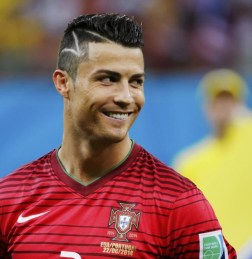
Cristiano Ronaldo is confident you don’t want to play against him. // Jorge Silva, Reuters

Political scientists question just how often open primaries lead to strategic voting, and whether the effect is anything but marginal (see references below). Even the notion that open primaries moderate candidate choice – the reason many states adopted them – doesn’t have much empirical support. But on its face, it doesn’t quite jive with the intent of a primary. To use a timely, though imperfect illustration, imagine if World Cup rosters were selected by the rest of the world, including fans of opposing teams that also want to win. Would Americans want Cristiano Ronaldo to be part of the Portuguese squad? Would anyone other than the Portuguese? Probably not. Fortunately, only a coach with firm ties to Portugal selects that nation’s team, and he wants to field the best players possible.

However, that is not what crossover voters did in the Mississippi Senate race. They didn’t sabotage the primary by lending support to the candidate they were most likely to beat in a general election… that would have been McDaniel, hands down. So why did liberal voters want a Republican nominee that Democrats can’t beat? Continue reading “Are open primaries a good idea? Depends on who you ask: Primary systems and polarization in light of the Mississippi Senate race”

#MSsen and the art of the modified tweet

It’s election day again in Mississippi, where the nation’s most interesting midterm race heads for a runoff. The contest between Thad Cochran and Chris McDaniel matches a 41-year Capitol Hill veteran who brings home pork for the poorest state in the union against a 41-year-old Tea Party conservative riding the wave of anti-government, anti-establishment, anti-Obama sentiment.

National political reporters have had their eye on Mississippi for a few weeks now, producing some interesting reads. I enjoyed BuzzFeed’s investigative reporting in the digital age, connecting dots between McDaniel’s campaign, a blogger who broke into Cochran’s wife’s nursing home, and Wikipedia edits. The Washington Post explored the popularity of Tea Party fiscal conservatives in states that benefit most from liberal federal spending. The Upshot, essentially the New York Times’ Nate Silver-less FiveThirtyEight, used Mississippi as a case study for what extremely partisan electorates do to the election process.

This blog post is not about any of that, really. It’s more of an aside from the primary three weeks ago, and it has to do with language. More specifically, language in the Twitter age.

Continue reading “#MSsen and the art of the modified tweet”

Institutional Isomorphism and the Community Structure Approach in Visual Framing of the Trayvon Martin Shooting

icaPresented May 25, 2014 at the annual conference of the International Communication Association, Seattle, Wash., Journalism Studies division.

To request the accompanying visual aids for this paper, email Dylan.

To read the abstract, go to the Academia page on dylanmclemore.com.

UPDATE: This conference paper has since been published.
DOI: 10.1080/17512786.2014.988993


The Trayvon Martin shooting and the legal (in)actions that followed, became perhaps the first major American news story of 2012. Narratives surrounding Martin and George Zimmerman widely varied, as did the images available to depict them. There’s a big difference between Zimmerman in an orange prison jumpsuit (for an unrelated charge for which he was never tried) and Zimmerman smiling in a suit and tie. Images of Martin depicted a boy much younger than the 17-year-old involved in the incident. Given the impact of imagery on the framing of a news story, this study considered competing explanations for why editors from newspapers serving racially distinct communities may have selected particular photographs to represent Martin and Zimmerman in their coverage. The method specifically sought to measure institutional isomorphism – a field-level homogeneity fed by stabilization and risk-reduction – and the community structure approach – variances at the local level based on the demographics of the market.

Among the findings:

– The story was far more likely to be depicted visually with images of or relating to Martin in the sample period (Feb. 27-Apr 27, 2012, or, from the day after the shooting to four days after Zimmerman’s not guilty plea in court).

– These depictions of or relating to Martin were overwhelmingly positive, while portrayals of Zimmerman were neutral-to-negative. Image valence held true across publications.

– Images of Martin himself quickly gave way to images of his family, and supportive demonstrators around the country. This initial spike of intense visual framing toward Martin diminished over time, and an increase in images of Zimmerman became apparent as he made more public appearances. Once again, these trends were consistent across publications.

What does it mean?

The findings observe a fairly homogenous media depiction of the Martin shooting. This is indicative of institutional isomorphism, though clear evidence of mimetic inter-media agenda setting was not identified. The results may be better explained by normative isomorphism, as media outlets quickly moved away from images captured outside of the context of the story. The apparent strength of journalistic norms in the face of a story that presented so many salacious angles offers some comfort to those concerned with the profit motive of the press affecting editorial decisions.

No support was found for the community structure approach. Despite the availability of images that portrayed Martin and Zimmerman in starkly different ways, newspapers serving predominately Black, Hispanic, and White communities employed similar presentations. Across the board, Martin was portrayed more frequently and more positively than Zimmerman, though Zimmerman’s legal battles seemed to be developing more frequent and nuanced coverage, a trend that should be followed beyond the sample in this particular study for a fuller understanding.

An awful game can’t stop the Super Bowl – Notes on ratings, ads, Bruno Mars and the dominance of the NFL

The Seattle Seahawks took 12 seconds to score against the Denver Broncos Sunday night. Perhaps more accurately, it took the Broncos 12 seconds to score on themselves. Both of those trends would maintain throughout the night as Super Bowl XLVIII (that’s 48 for the Roman-numerically challenged) turned into a showcase for the best defense in the league and a nightmare for one of the greatest quarterbacks of all time, who now has lost more games in the postseason than anyone else.

The third-largest blowout in Super Bowl history may have been responsible for some of the early exits from the party I attended. And surely it was trouble for FOX and its legion of advertisers, who paid $4 million for the most expensive 30 seconds on television.

Only it wasn’t, because the NFL is the biggest draw in entertainment today, and its dominance has never been more evident.

Continue reading “An awful game can’t stop the Super Bowl – Notes on ratings, ads, Bruno Mars and the dominance of the NFL”