Are open primaries a good idea? Depends on who you ask: Primary systems and polarization in light of the Mississippi Senate race

Mississippi’s Republican primary for U.S. Senate was not decided purely by Republican voters. While the specific number of “crossover” votes can be difficult to ascertain, the fact is that turnout in traditionally Democratic areas increased dramatically from the June 3 primary to the June 24 runoff (perk of all that national attention? Fantastic data journalism). It’s also true that incumbent Sen. Thad Cochran’s campaign targeted those voters between his 2nd-place finish to Tea Party-backed challenger Chris McDaniel on June 3 and his victory on June 24.

AP/Politico
AP/Politico

While legal in Mississippi, plenty will say that’s dirty politics. McDaniel certainly felt so. He refused to concede on election night, arguing that “the conservative movement took a backseat to liberal Democrats in Mississippi.”

“Before this race ends,” McDaniel said, “We have to be certain that the Republican primary was won by Republican voters.”

And while I felt McDaniel’s reality-defying non-concession speech only affirmed those who question the ability of ideologues to govern, I also felt a certain degree of sympathy. In the eyes of his supporters (and, to be fair, some of his detractors), his party’s nomination was stolen from him by people who wouldn’t consider themselves part of that party.

Primaries exist so that parties can select their nominee for a particular office. That used to be a decision left to party leaders (via conventions or caucuses), but because of a number of reasons – establishment-bias and corruption chief among them – popular votes through primary elections have become the nominating mechanism of choice. Because of their purpose, many states have closed primaries, meaning that the only people allowed to vote in a party primary are registered members of that party. “Semi-closed” primaries also allow for non-affiliated voters (independents) to participate. (A handy map of state primary rules is available here.)

Mississippi’s primaries are open, meaning that with each new election cycle, voters can choose anew which party’s primary they wish to vote in, regardless of personal political affiliation. In the case of the Cochran-McDaniel runoff, anyone who voted in the Democratic primary on June 3 was ineligible to vote in the Republican runoff (they already made their choice this cycle). But everyone else, including registered Democrats who stayed home on June 3, could participate.
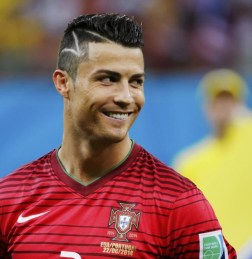
Cristiano Ronaldo is confident you don’t want to play against him. // Jorge Silva, Reuters

Political scientists question just how often open primaries lead to strategic voting, and whether the effect is anything but marginal (see references below). Even the notion that open primaries moderate candidate choice – the reason many states adopted them – doesn’t have much empirical support. But on its face, it doesn’t quite jive with the intent of a primary. To use a timely, though imperfect illustration, imagine if World Cup rosters were selected by the rest of the world, including fans of opposing teams that also want to win. Would Americans want Cristiano Ronaldo to be part of the Portuguese squad? Would anyone other than the Portuguese? Probably not. Fortunately, only a coach with firm ties to Portugal selects that nation’s team, and he wants to field the best players possible.

However, that is not what crossover voters did in the Mississippi Senate race. They didn’t sabotage the primary by lending support to the candidate they were most likely to beat in a general election… that would have been McDaniel, hands down. So why did liberal voters want a Republican nominee that Democrats can’t beat? Continue reading “Are open primaries a good idea? Depends on who you ask: Primary systems and polarization in light of the Mississippi Senate race”

Chick-fil-A, the First Amendment, and the drawing out of a public relations firestorm

Since Chick-fil-A President Dan Cathy’s comments on same-sex marriage one week ago, folks on both sides of the debate have been speaking out. Opinion leaders have publicly shown their support for the fast-food chain, like former Arkansas governor and current talk show host Mike Huckabee, who is orchestrating a Chick-fil-A Appreciation Day. Opinion leaders have publicly denounced the fast-food chain, like the Henson Company, which announced its Muppets characters would no longer be tied to Chick-fil-A promotions. As I wrote last Thursday, choosing a side on a hot-button issue is not going to come without repercussions. From a purely business perspective, the hard-line stance could only harm Chick-fil-A’s bottom line by offending some and turning a trip to the drive-thru into a moral dilemma.

[RELATED: Chick-fil-A on public relations tightrope after latest Cathy same-sex marriage comments]

But in recent days, Chick-fil-A has received some unexpected help in its public relations quagmire from an opposition that has lost its mind and its constitutional principles.

Continue reading “Chick-fil-A, the First Amendment, and the drawing out of a public relations firestorm”

Perceived Media Bias and Cable News Branding: The Effects of Diversification in the Marketplace of Information

This presentation was given Saturday at the AEJMC Annual Conference as part of a refereed paper research session on “Bias and Branding” sponsored by the Radio-Television Journalism Division. This is a rudimentary script to an oral presentation with visual aids, so it will leave a bit to be desired for the blog reader.

For the PowerPoint accompanying this presentation, email Dylan.

For more on the conference as a whole, view my main post on AEJMC ’11.

Claims of media bias are nothing new. And despite plentiful content analyses that show little to no evidence of some collective attempt to mislead the public, perceptions of bias not only remain, but have increased dramatically over the past decade, a time frame that correlates with the rise of Fox News and MSNBC – cable news networks to compete with CNN and create a competitive marketplace.

Researchers like Sutter or Anand, DiTella, and Galetovic have looked at news coverage economically, and cable news as just what it is – a for-profit industry. That means, like any differentiated product market, the news outlets must seek a place along a continuum of potential audiences. With radio stations, it would be genres of music; with news it could be the types of stories covered (intl/domestic; hard news/entertainment), but we often think of it in terms of political ideology.

The suggestion is that our oft-idealized paradise of objectivity doesn’t make good business sense, because wide-open market segments are left untapped while everyone battles for the middle. If every station in town is playing country music, why don’t you try reaching out to the hip-hop fans? (Ideology isn’t quite so drastic, but you get the idea.)

So instead, content analyses (or a casual channel surf during primetime) have suggested that the cable news environment looks something like this. Each network has differentiated, targeting its own particular audience. Which begs the question… How do these differentiation attempts influence the audience’s perceptions of bias in those networks?

Continue reading “Perceived Media Bias and Cable News Branding: The Effects of Diversification in the Marketplace of Information”