Rolling Stone cover of alleged Boston bomber sparks controversy – Framing villains and violence

Social media went nuts Wednesday, when Rolling Stone released its latest issue, the cover featuring alleged Boston Marathon bomber Dzhokhar Tsarnaev.

Rolling Stone Tsarnaev

As the day wore on, major pharmacy chains CVS, Walgreens, and Rite Aid all announced they would not carry the issue. Boston Mayor Thomas Menino wrote a letter to the magazine’s publisher condemning the glorification of terrorists and wondering why first responders and survivors didn’t make the cover.

The cover refers to Tsarnaev as “The Bomber,” though he pleaded not guilty and is awaiting trial. The photo is from Tsarnaev’s Twitter account, and – let’s face it – could have just as easily been the face of a young pop star gracing the music magazine.

Surely that must be the reason for our collective outrage – Tsarnaev doesn’t look like the bad guy here, though the cover text goes on to say he “fell into radical Islam and became a monster.” But even that phrasing, “fell into,” refers to a narrative that has existed since the day a major American city was completely shut down until Dzhokhar was found bleeding in a boat – he was the sheep that wandered into older brother Tamerlan’s sadistic plans. Dzhokhar was to be admired before his fall. He “became a monster”; we remember his humanity. (Though the article makes it pretty clear “The Bomber” is no hero to be celebrated.)

But Boston remembers humanity as well. The three killed at the marathon; the MIT police officer killed in the lead-up to the massive manhunt; the 280 injured between the two events. In the days following the bombing, newspapers and television newscasts were filled with graphic images of victims clutching soon-to-be-amputated limbs along blood-soaked sidewalks. Seeing one of the two men responsible for that carnage on the cover of a national publication is going to stir some raw emotions.

Except it didn’t in May, just three weeks after the bombing, when the New York Times ran the exact same photograph on their front page to promote a similar profile story.

Continue reading “Rolling Stone cover of alleged Boston bomber sparks controversy – Framing villains and violence”

Covering the Conventions: Bias in Pre and Post-speech Media Commentary during the 2012 Presidential Nominating Conventions

aejmc USF


Presented March 1, 2013 at the AEJMC Southeast Colloquium, Tampa, Fla. Electronic News Division, Top Paper Award.

To request the accompanying PowerPoint, email Dylan.

To read the abstract and request the full paper, go to the Academia page on dylanmclemore.com.

SYNOPSIS:

Party nominating conventions used to be messy and meaningful. Today, they’re more pomp and circumstance. It’s no wonder the broadcast television networks pay far less attention to them now than in decades past. For cable news, on the other hand, the conventions provide fuel – or at least a moving backdrop – to the 24-hour news cycle. And in the pauses between speakers, the talking heads weigh-in with their analysis.

There is a healthy amount of research suggesting that the party nominating conventions can influence voters, as well as a stack of studies that indicate media analysis of political events can influence voters. However, the specific cross-section between conventions and commentary has not been evaluated.

Does instant media commentary affect perceptions of convention speeches? This study lays the foundation for that investigation by looking at how favorably (or unfavorably) different news networks covered the 2012 Republican and Democratic national conventions.

We looked at a large sample of live convention coverage – all six nights of primetime (10 p.m. E.T.) on the three major broadcast (ABC, CBS, NBC) and cable (CNN, Fox News, MSNBC) networks. Here’s what we learned:

  • Convention coverage was generally favorable to the host party.
  • Bias was indicated by an exaggeration of this positive commentary, and near absence of negative commentary (for instance, coverage of the DNC on MSNBC was 3% negative; the RNC on Fox News was only 2% negative). In other words, unbalanced coverage was not the result of tearing one side down, but by disproportionately praising the other.
  • The largest differences in valence were observed on Fox News & MSNBC, though some statistical tests revealed evidence of bias in traditional network broadcasts.

We look forward to enriching this study with further data from the content analysis, including potential explanatory mechanisms. Next, we desire to test the effects of such instant media commentary on the audience. We extend our thanks to the School of Mass Communications at the University of South Florida for hosting the event, and the paper judges for honoring us with the Top Paper Award in the Electronic News Division.

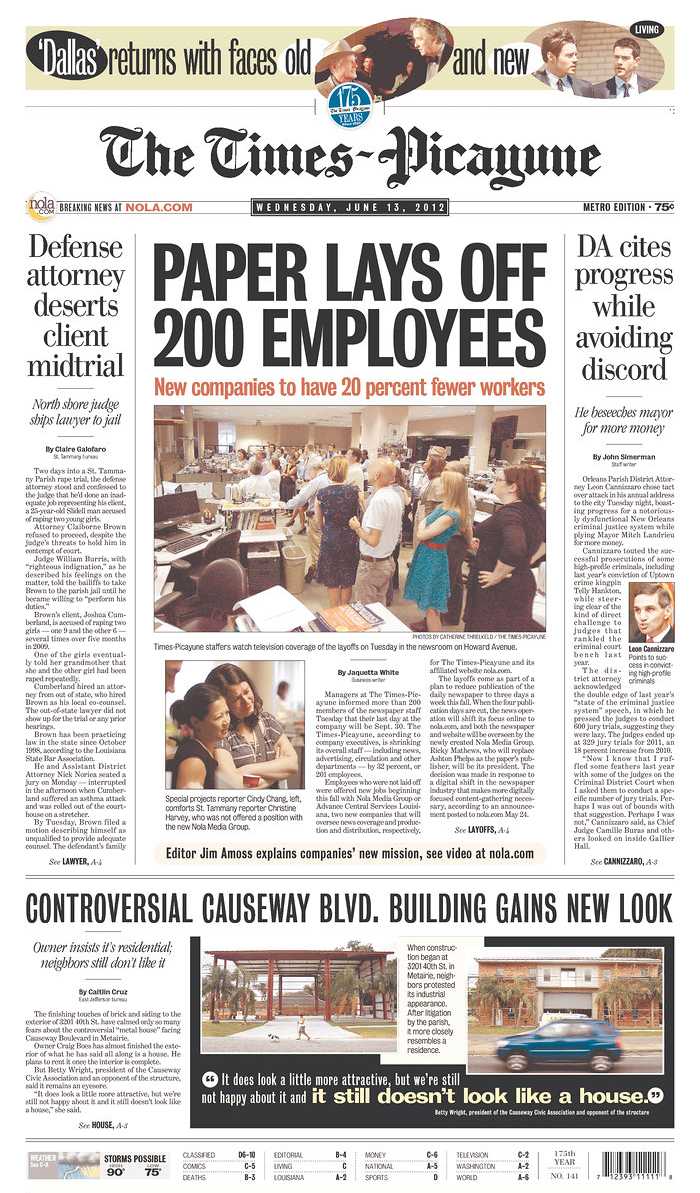
Mass layoffs or ‘job notifications’? Advance’s attempt to spin its Deep South newspaper guttings

Six hundred employees at four Deep South newspapers lost their jobs Tuesday, as Advance Publications continues its transition to primarily digital news. The cuts hit newsrooms surprisingly hard, especially in the wake of Advance’s earlier commitment to “significantly increase online news-gathering efforts” and offer “richer” “deeper” “robust” “enhanced printed newspapers on a scheduled of three days a week.”

In May, Advance announced limited print schedules and a revamped online approach for the New Orleans Times-Picayune, the Birmingham News, the Mobile Press-Register, and the Huntsville Times.

[RELATED: Times-Picayune, part of New Orleans culture, scaling back; Alabama papers hit, too]

The Times-Picayune lost 49% of its news staff on Tuesday. The Birmingham News purged 60% of their journalists. In moves that cut roughly one-third of each newspaper’s overall staffing, it would seem that the actual news gatherers were hit disproportionately hard.

Advance promises that a portion of these positions will be refilled, no doubt by less experienced, more affordable reporters. Still, fulfilling the watchdog role of the press is awful tough work when there aren’t capable bodies there to do the groundwork.

And if yesterday’s events were any indication, the NOLA and AL media groups are going to have a lot of trouble covering their respective cities. Just look at how poorly they covered themselves…

Continue reading “Mass layoffs or ‘job notifications’? Advance’s attempt to spin its Deep South newspaper guttings”

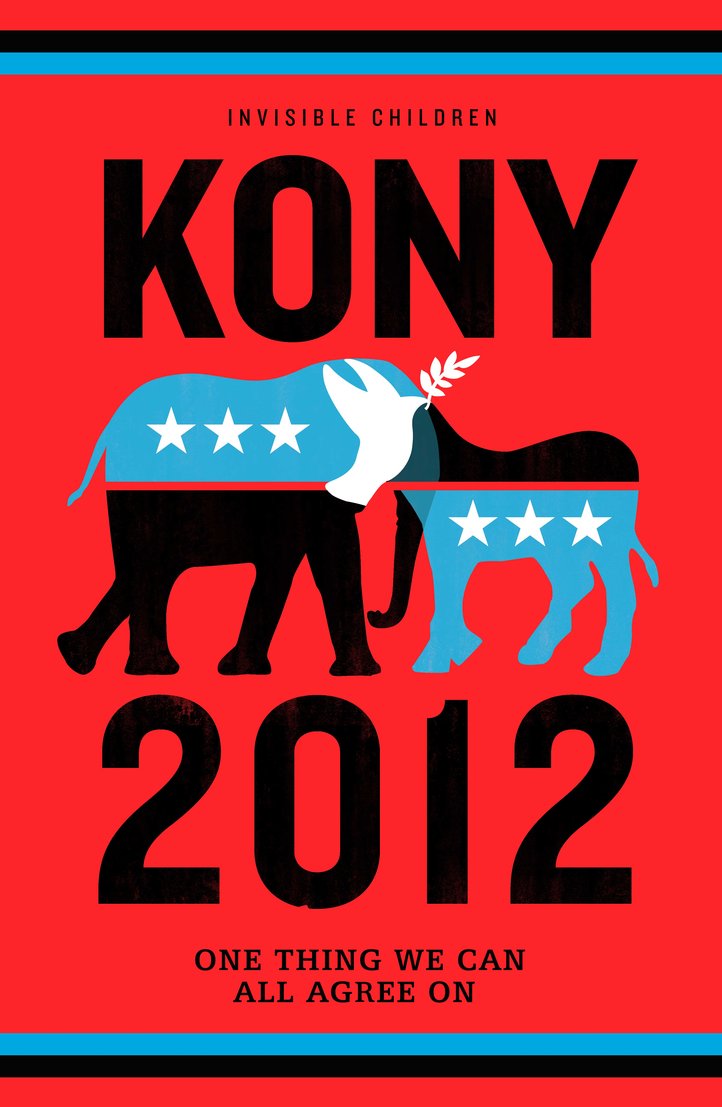
KONY 2012: Awareness and accuracy; Idealism and cynicism

Joseph Kony is an evil man. But are the people who likely made you aware of him in the first place even worse? Over the course of just a few days, the world responded to the message of Invisible Children’s short film, Kony 2012, then shot the very messenger that brought them the news. And by the end of it all, at least one man was naked on a street corner.

It was a unique event.

The video itself was the eleventh by Invisible Children, and even in its short lifespan, the most effective. As of the writing of this post – three weeks after the video’s release – Kony 2012 had been viewed over 100 million times on YouTube and Vimeo. MSNBC wrote in greater detail about how the video went viral, while the Chronicle of Philanthropy provided a more philosophical, yet briefer account.

So, Kony 2012 was achieving its goal – to make Joseph Kony famous. There is no denying that the world is now more aware of the man than before the campaign. However, in the process of making Kony famous, Invisible Children too became noteworthy, and when one attracts a certain amount of attention, it is only a matter of time before a critical lens is applied.

Continue reading “KONY 2012: Awareness and accuracy; Idealism and cynicism”

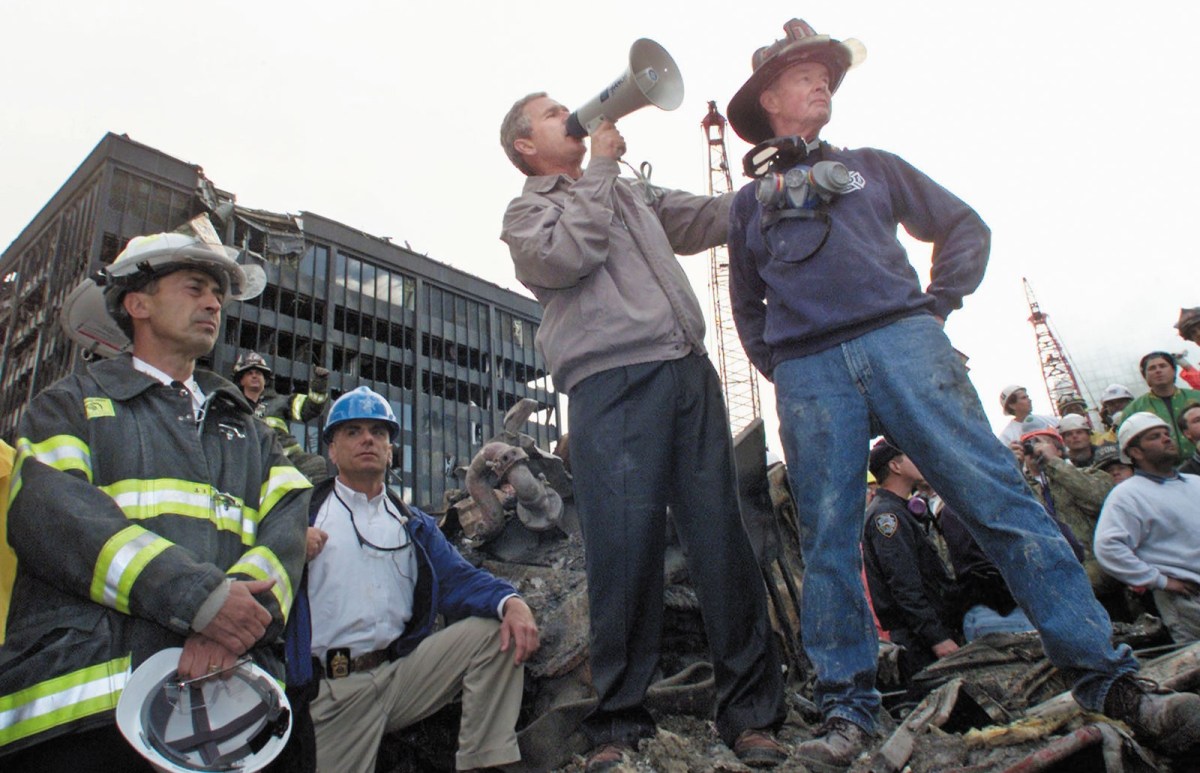
Teaching September 11

One of my senior-level seminar courses took a break from our normal lecture schedule last week to look back at the September 11, 2001 terrorist attacks and their impact on journalism, culture, and diplomacy in the United States and abroad. I titled the series, “Effects of 9/11 – 10 Years Later,” and opened it to students across the campus.

With the immense anniversary coverage being prepared for the weekend ahead, it seemed like an excellent opportunity to look back (For more on the extent of the coverage, see Paul Farhi’s piece in the Washington Post). The idea gained steam with the launch of the new Understanding 9/11 page from the Internet Archive, a massive collection of television coverage from the original Sept. 11, 2001 broadcasts of major news networks around the world.

I arranged the lectures around clips from the archive and other corners of the Internet. I was quite pleased with the discussions that took place. My colleagues and I wondered if the students – most of them 10-11 years old when the attacks occurred – would have the same memories of that day as we do. As it turned out, the associations were still strong, and sparked some great debate.

Continue reading “Teaching September 11”