“Evil Visited this Community Today”: News Media Framing of the Sandy Hook School Shooting

aejmcPresented August 8, 2013 at the annual conference of the Association for Education in Journalism and Mass Communication (AEJMC), Washington, D.C., Newspaper and Online News Division.

To request the accompanying tables and figures, email Dylan.

To read the abstract and request the full paper, go to the Academia page on dylanmclemore.com.


SYNOPSIS:

On December 14, 2012, Adam P. Lanza shot and killed 20 children and 6 staff members at Sandy Hook Elementary School in Newtown, Ct., in the deadliest grade school shooting in American history. Media coverage of the tragedy was swift and extensive. Naturally, grief gave way to the question – How could this have happened? A content analysis of seven U.S. newspapers looked at the way the Sandy Hook shooting was framed and how problem definitions emerged in the week following the incident.

The seven papers were The Hartford Courant, The New York Times, The Washington Post, The Los Angeles Times, The Chicago Tribune, The St. Louis Post Dispatch and The Atlanta Journal Constitution. Articles were coded for topical frame, presence of blame, valence, and source of information.

In the case of Sandy Hook, the death of so many children, all seven years of age or younger, presented a dramatic frame not present in many other prominent massacres. As such, stories were often framed in terms of the victims, and were overwhelmingly positive – celebrating the lives lived rather than lamenting the lives lost.

Guns emerged as the most prominent problem definition, or “blame frame.” Already an institutionalized frame for examining shootings like Columbine and Aurora, the frame was propelled by major political figures, including President Barack Obama and Connecticut Governor Dannel Malloy, who advocated gun control in the wake of the shooting.

Discussion of mental health was also prevalent in the coverage, and a specific point of interest for us. Many recent mass shootings, including Virginia Tech, Tucson, and Aurora, have been carried out by individuals with a mental illness. However, confirming diagnoses often lag far behind media speculation. A considerable number of stories mentioned that Lanza had Asperger’s Syndrome, a form of autism. Autism is a neurological disorder, not a mental illness, and would not have been responsible for the type of premeditated violence perpetrated at Sandy Hook. Still, Lanza’s mental health remained a topic of speculation in the media.

Even more troubling was the sourcing of the mental illness frame. Rather than relying on experts in the field, three-quarters of mental illness frames relied on members of the communities, victims’ families, or similar laypersons. Sourcing for other frames made more sense. Political figures involved in the debate informed the gun control frame, educators and law enforcement informed the school security frame, and community members informed the victim frame.

A long-held criticism of the press is that it is insensitive to victims of tragedy, immediately trying to move the story forward. That criticism was not validated by the present study. Only two stories from the first day of coverage invoked blame, increasing to about a third of stories on day two. By day three, attributing blame became a focus of media coverage, accounting for more than half of frames over the rest of the week.

We look forward to refining our methodology and exploring coverage of events that capture national attention. We extend our thanks to the reviewers, moderator, and discussant for taking the time to read our paper and provide valuable feedback.

Covering the Conventions: Bias in Pre and Post-speech Media Commentary during the 2012 Presidential Nominating Conventions

aejmc USF


Presented March 1, 2013 at the AEJMC Southeast Colloquium, Tampa, Fla. Electronic News Division, Top Paper Award.

To request the accompanying PowerPoint, email Dylan.

To read the abstract and request the full paper, go to the Academia page on dylanmclemore.com.

SYNOPSIS:

Party nominating conventions used to be messy and meaningful. Today, they’re more pomp and circumstance. It’s no wonder the broadcast television networks pay far less attention to them now than in decades past. For cable news, on the other hand, the conventions provide fuel – or at least a moving backdrop – to the 24-hour news cycle. And in the pauses between speakers, the talking heads weigh-in with their analysis.

There is a healthy amount of research suggesting that the party nominating conventions can influence voters, as well as a stack of studies that indicate media analysis of political events can influence voters. However, the specific cross-section between conventions and commentary has not been evaluated.

Does instant media commentary affect perceptions of convention speeches? This study lays the foundation for that investigation by looking at how favorably (or unfavorably) different news networks covered the 2012 Republican and Democratic national conventions.

We looked at a large sample of live convention coverage – all six nights of primetime (10 p.m. E.T.) on the three major broadcast (ABC, CBS, NBC) and cable (CNN, Fox News, MSNBC) networks. Here’s what we learned:

  • Convention coverage was generally favorable to the host party.
  • Bias was indicated by an exaggeration of this positive commentary, and near absence of negative commentary (for instance, coverage of the DNC on MSNBC was 3% negative; the RNC on Fox News was only 2% negative). In other words, unbalanced coverage was not the result of tearing one side down, but by disproportionately praising the other.
  • The largest differences in valence were observed on Fox News & MSNBC, though some statistical tests revealed evidence of bias in traditional network broadcasts.

We look forward to enriching this study with further data from the content analysis, including potential explanatory mechanisms. Next, we desire to test the effects of such instant media commentary on the audience. We extend our thanks to the School of Mass Communications at the University of South Florida for hosting the event, and the paper judges for honoring us with the Top Paper Award in the Electronic News Division.

Crime Scene: A lesson in reporting & interviewing (w/ fake blood!)

A gruesome murder has occurred on the SAU campus – the fifth on an area campus in as many weeks. But for the first time, the killer has slipped, leaving clues behind…

This slideshow requires JavaScript.

Crime Scene is a collaborative project between the Theatre and Mass Communication students within the department. Students in my Reporting and Writing course attempt to uncover details of the apparent murder and develop a news story capturing the facts of the case so far.

It’s their favorite day of the semester. Mine, too.

Continue reading “Crime Scene: A lesson in reporting & interviewing (w/ fake blood!)”

Teaching September 11

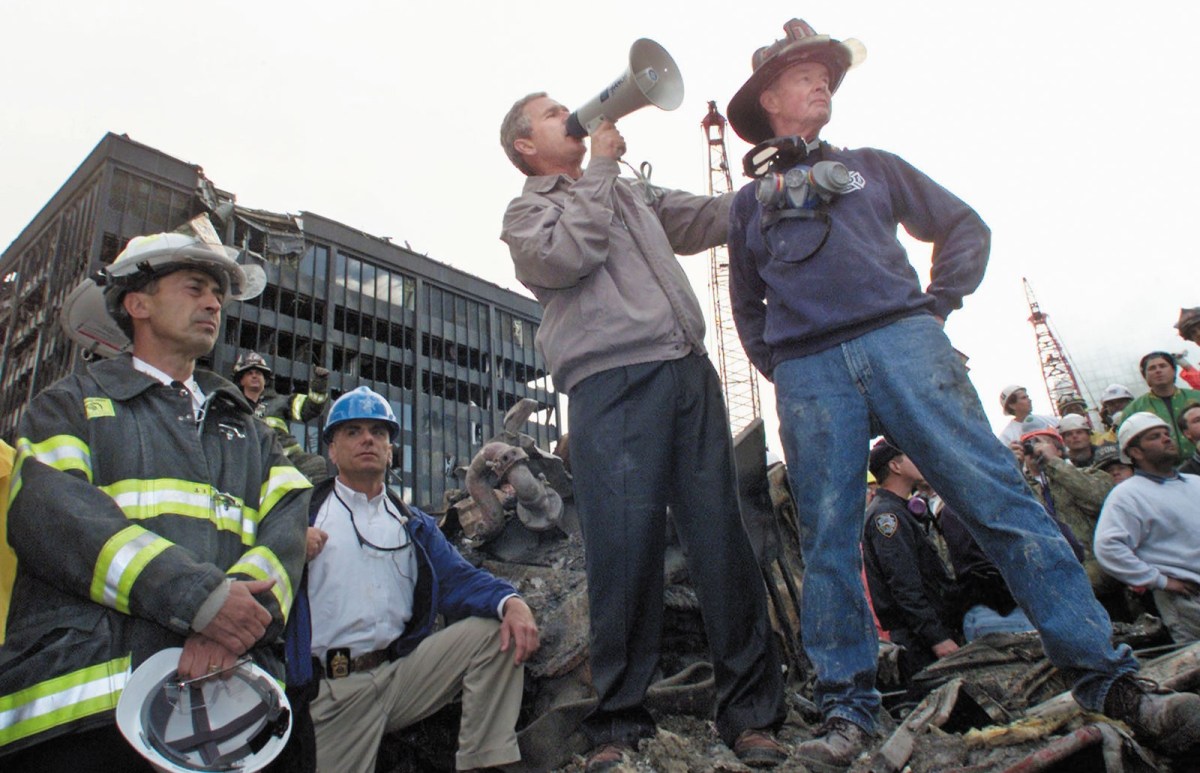
One of my senior-level seminar courses took a break from our normal lecture schedule last week to look back at the September 11, 2001 terrorist attacks and their impact on journalism, culture, and diplomacy in the United States and abroad. I titled the series, “Effects of 9/11 – 10 Years Later,” and opened it to students across the campus.

With the immense anniversary coverage being prepared for the weekend ahead, it seemed like an excellent opportunity to look back (For more on the extent of the coverage, see Paul Farhi’s piece in the Washington Post). The idea gained steam with the launch of the new Understanding 9/11 page from the Internet Archive, a massive collection of television coverage from the original Sept. 11, 2001 broadcasts of major news networks around the world.

I arranged the lectures around clips from the archive and other corners of the Internet. I was quite pleased with the discussions that took place. My colleagues and I wondered if the students – most of them 10-11 years old when the attacks occurred – would have the same memories of that day as we do. As it turned out, the associations were still strong, and sparked some great debate.

Continue reading “Teaching September 11”

Perceived Media Bias and Cable News Branding: The Effects of Diversification in the Marketplace of Information

This presentation was given Saturday at the AEJMC Annual Conference as part of a refereed paper research session on “Bias and Branding” sponsored by the Radio-Television Journalism Division. This is a rudimentary script to an oral presentation with visual aids, so it will leave a bit to be desired for the blog reader.

For the PowerPoint accompanying this presentation, email Dylan.

For more on the conference as a whole, view my main post on AEJMC ’11.

Claims of media bias are nothing new. And despite plentiful content analyses that show little to no evidence of some collective attempt to mislead the public, perceptions of bias not only remain, but have increased dramatically over the past decade, a time frame that correlates with the rise of Fox News and MSNBC – cable news networks to compete with CNN and create a competitive marketplace.

Researchers like Sutter or Anand, DiTella, and Galetovic have looked at news coverage economically, and cable news as just what it is – a for-profit industry. That means, like any differentiated product market, the news outlets must seek a place along a continuum of potential audiences. With radio stations, it would be genres of music; with news it could be the types of stories covered (intl/domestic; hard news/entertainment), but we often think of it in terms of political ideology.

The suggestion is that our oft-idealized paradise of objectivity doesn’t make good business sense, because wide-open market segments are left untapped while everyone battles for the middle. If every station in town is playing country music, why don’t you try reaching out to the hip-hop fans? (Ideology isn’t quite so drastic, but you get the idea.)

So instead, content analyses (or a casual channel surf during primetime) have suggested that the cable news environment looks something like this. Each network has differentiated, targeting its own particular audience. Which begs the question… How do these differentiation attempts influence the audience’s perceptions of bias in those networks?

Continue reading “Perceived Media Bias and Cable News Branding: The Effects of Diversification in the Marketplace of Information”