
Arkansans don’t put up with secretive politicians. Our Natural State is skepticism (pun intended). It’s why we spent the past year filling purposefully small rooms for school board meetings and finding ways into unadvertised “town halls.” When public officials try to keep something in the dark, we show up with spotlights.
Our opposition to opaqueness is codified into state law. The Arkansas Freedom of Information Act (FOIA) is described by the state attorney general’s office as “one of the most comprehensive and strongest open-records and open-meetings laws in the country.”
It was passed in 1967, a few months after the federal FOIA, and is widely regarded as a superior defense of the public’s right to know. The Arkansas law requires the government to answer citizens’ information requests faster with fewer exemptions, and builds in an appeals process that is punitive toward government agencies that try to skirt the law.
The promotion and preservation of Arkansas’ FOIA is a partnership between our government and its citizens. The attorney general’s office collaborates with the Arkansas Press Association and Arkansas Broadcasters Association to publish a FOIA handbook and distribute it to anyone interested in learning how to attend government meetings or request public records. A Freedom of Information Task Force, created by state law in 2017, evaluates any legislative proposals that would affect the state’s FOIA. It consists of members appointed by government leaders, press associations and civic organizations.
We’re serious about sunshine around here. Which is why we’re calling all hands on deck to prevent the governor from curtailing our ability to hold our leaders accountable.
“They don’t care about transparency,” Gov. Sarah Huckabee Sanders said of people “weaponizing” FOIA to investigate her administration. “They want to waste taxpayer dollars, slow down our bold conservative agenda and frankly put my family’s lives at stake.”
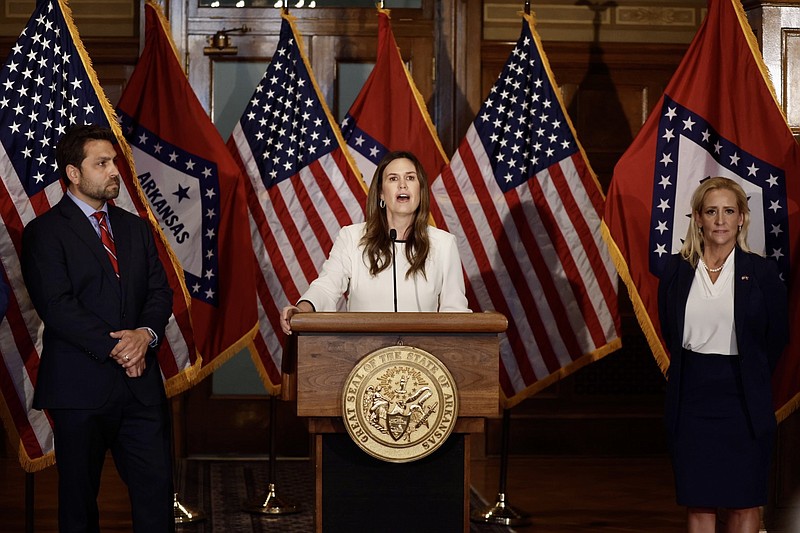
Sanders has called a special session of the Arkansas legislature this week focused, in part, on “streamlining state government.” She’s referring to House Bill 1003, designed to add new exemptions to the state’s FOIA and all but eliminate the ability to recover expenses from having to sue a government agency that refuses to comply.
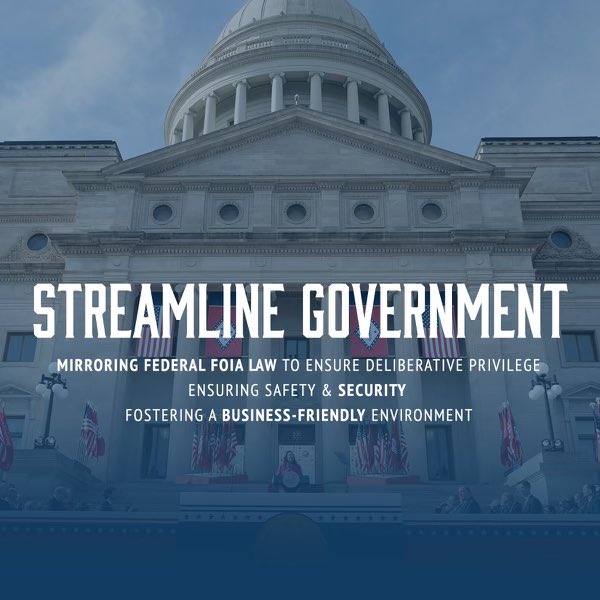
The most impactful new exemption would allow state agencies to hide records related to the “deliberative process” of government. The purposefully vague clause could restrict the public from seeing a wide range of communications that reveal, well, anything but the final product officials choose to make public.
“If this exemption becomes law, Arkansans will overnight go from the strongest open records law in the country to the weakest,” Fort Smith attorney Joey McCutchen told Talk Business & Politics.
Sanders’ office has framed the amendment as a way to align Arkansas’ FOIA more closely with the federal version. It’s a sharp departure from the governor’s typical anti-Washington brand of Arkansas exceptionalism, instead advocating to lower her state’s standards to mirror that of a secretive “deep state.”
Sanders’ belief that government expediency is more important than the public’s right to know what that government is doing defies the core of conservatism and the political spirit of the state she serves.
“Weakening the FOIA isn’t the conservative move,” an Arkansas Democrat-Gazette editorial asserted. “It’s very much a leap into theory, throwing away a tradition that Arkansas has of being one of the best states in the nation when it comes to government transparency.”
But what of the task force? Sanders bypassed it* by advancing the measure as an emergency. Why? At last the real reason we’re here – a local blogger and FOIA aficionado, Matt Campbell, has been trying to figure out why the governor is such a frequent flyer on a taxpayer-funded state police jet, and who is joining her on some flights that seem strangely crowded (including an 11-minute flight from Fayetteville to Rogers, towns separated by about 20 miles of interstate).
*Update: The FOIA task force met Monday morning and voted unanimously to strongly oppose the bill. The rushed timing preventing proper review was one of the stated reasons for opposition.

Sanders claims being able to use FOIA for this rather routine purpose threatens the safety of her children. Thus, action must be taken immediately in a special session. It’s unclear how retroactively hiding information dating back to Jan. 1, 2022 fits under an emergency need to conceal her future whereabouts.
Republicans hold every statewide office in Arkansas and a supermajority in the legislature. What the governor wants, she gets. But this time, traditional conservatives are pushing back against a distinctly authoritarian measure (curated by my UCA colleague Rich Shumate on the platform formerly known as Twitter).
Republican committees in Pulaski and Saline counties (that’s Little Rock and suburbs) have each published statements opposing the bill, the latter excoriating its sponsoring legislators by citing their own party platform back to them:
“We firmly support transparency and openness at every level of government. Those elected, appointed, and employed in government work for the taxpayers and must provide public information when requested, in line with Arkansas’s Freedom of Information Act.”
Americans for Prosperity, the conservative political action committee founded by the Koch brothers, stated they were “deeply concerned” about the proposed FOIA changes, reminding members that “transparent government is a cornerstone of democracy.”
Self-described conservative local news startup Conduit has also come out against Sanders, calling her measure “the career-ending FOIA bill.”
I teach aspiring journalists who will use FOIA to serve the public interest. It’s a real point of pride to show them how our state rises above the politics of the moment to protect a right fundamental to our democracy. I implore Arkansas lawmakers to do the right thing, rebuff the governor, and demand that we remain an example of government transparency and accountability to the rest of the nation.
If you live in Arkansas and would like to contact your legislators, a list can be found here.

 dylan mclemore