
My television tuned to the network morning programs; my browser displayed a handful of news sites and Twitter. With breakfast in hand, I was in full breaking news mode Thursday morning, awaiting word of the Supreme Court’s opinion on the Affordable Care Act. More simply, healthcare reform; more partisan, Obamacare.
A few minutes after 9 a.m. central time, every major news network was on the air, trying to be the first to summarize the 193-page opinion. CNN, the former cable news king now in dire need of ratings, was the first major source to make a declaration. Individual mandate: Unconstitutional. Healthcare law: Thrown out. On-air, online, on social media, through email blast, CNN was ready to celebrate an all-out, multi-channel, breaking news of the year scoop!
Except they were wrong. A misreading of the opinion, they claimed.
Individual mandate: Constitutional. Healthcare law: Upheld.
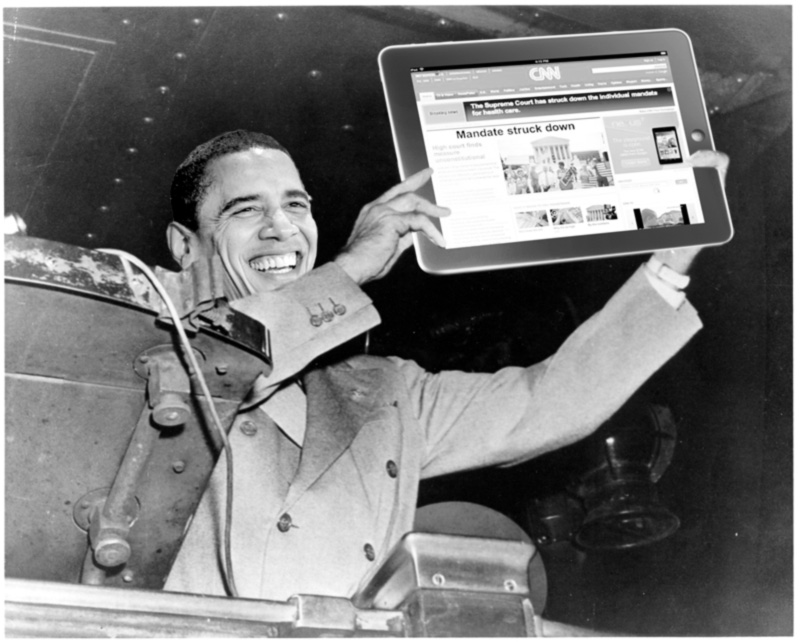
CNN wasn’t alone (though they were certainly most prominent). Fox News displayed the incorrect opinion on a banner during their live television coverage. A number of Republican political figures jumped the gun in celebration. Others goofed. Read all about it.
It used to be that getting a scoop mattered. Beating a competitor by an entire day in a printed newspaper really meant something. But today, when information is disseminated over various channels within minutes (or seconds) of each other, does being first really mean that much? Is it worth being wrong? Ask CNN. Sure, the tagline could have read: “We get you the news 11 seconds before the other guys.” Enviable, to be sure. Instead, they made “The most trusted name in news” read like a relic from a time when their newsroom had some sense.

 dylan mclemore