A Cross-Cultural Comparison of Campaign Tweets in the 2012 U.S. and South Korean Presidential Elections

aejmc14Presented August 8, 2014 at the annual conference of the Association for Education in Journalism and Mass Communication, Montreal, Qc., Canada, Political Communication Interest Group.

For more information about this paper available here, or by visiting the Academia page on dylanmclemore.com.


As America embarked on its second social media election, changes to South Korea’s election laws permitted the highly digital nation to have its first. Amidst concerns that reform might lead to Americanized campaigning in South Korea, we sought to compare the Twitter activity between candidates in the two countries.

We conducted an extensive content analysis of over 4,500 Tweets from the accounts of presidential candidates, from frontrunners like Barack Obama and Park Geun-hye to third-partiers or independents like Jill Stein and Kang Ji-won. Specifically, we were curious as to what topics candidates Tweeted about, whether they used collectivist or individualistic language, and how often they used Twitter to engage in opposition attacks.

Among the findings:

– U.S. candidate Twitter feeds focused on issues and candidate image, while South Korean feeds spent more time promoting campaign events.

– Surprisingly, South Korean feeds featured almost entirely third-person language. They were far less likely to use collective “we/you” language than American candidates. U.S. feeds were also more likely to engage in individualistic “I” language. This might be less of a result of cultural differences in communication styles and more a function of South Korean usage of Twitter as a campaign calendar more than a platform for ideas.

– American candidates used Twitter to attack opponents more often than South Korean candidates. However, given cultural and political norms in the two nations, the number of attacks in the U.S. was less than what one might expect in other campaign communications, while the noticeable presence of negative campaigning in South Korea was new and somewhat surprising.

Together, the findings denote some differences between the two countries in Twitter campaign communication. However, similarities also emerged, and tended to point toward an Americanization of political discourse.

Are open primaries a good idea? Depends on who you ask: Primary systems and polarization in light of the Mississippi Senate race

Mississippi’s Republican primary for U.S. Senate was not decided purely by Republican voters. While the specific number of “crossover” votes can be difficult to ascertain, the fact is that turnout in traditionally Democratic areas increased dramatically from the June 3 primary to the June 24 runoff (perk of all that national attention? Fantastic data journalism). It’s also true that incumbent Sen. Thad Cochran’s campaign targeted those voters between his 2nd-place finish to Tea Party-backed challenger Chris McDaniel on June 3 and his victory on June 24.

AP/Politico
AP/Politico

While legal in Mississippi, plenty will say that’s dirty politics. McDaniel certainly felt so. He refused to concede on election night, arguing that “the conservative movement took a backseat to liberal Democrats in Mississippi.”

“Before this race ends,” McDaniel said, “We have to be certain that the Republican primary was won by Republican voters.”

And while I felt McDaniel’s reality-defying non-concession speech only affirmed those who question the ability of ideologues to govern, I also felt a certain degree of sympathy. In the eyes of his supporters (and, to be fair, some of his detractors), his party’s nomination was stolen from him by people who wouldn’t consider themselves part of that party.

Primaries exist so that parties can select their nominee for a particular office. That used to be a decision left to party leaders (via conventions or caucuses), but because of a number of reasons – establishment-bias and corruption chief among them – popular votes through primary elections have become the nominating mechanism of choice. Because of their purpose, many states have closed primaries, meaning that the only people allowed to vote in a party primary are registered members of that party. “Semi-closed” primaries also allow for non-affiliated voters (independents) to participate. (A handy map of state primary rules is available here.)

Mississippi’s primaries are open, meaning that with each new election cycle, voters can choose anew which party’s primary they wish to vote in, regardless of personal political affiliation. In the case of the Cochran-McDaniel runoff, anyone who voted in the Democratic primary on June 3 was ineligible to vote in the Republican runoff (they already made their choice this cycle). But everyone else, including registered Democrats who stayed home on June 3, could participate.

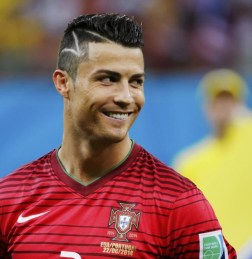
Cristiano Ronaldo is confident you don’t want to play against him. // Jorge Silva, Reuters

Political scientists question just how often open primaries lead to strategic voting, and whether the effect is anything but marginal (see references below). Even the notion that open primaries moderate candidate choice – the reason many states adopted them – doesn’t have much empirical support. But on its face, it doesn’t quite jive with the intent of a primary. To use a timely, though imperfect illustration, imagine if World Cup rosters were selected by the rest of the world, including fans of opposing teams that also want to win. Would Americans want Cristiano Ronaldo to be part of the Portuguese squad? Would anyone other than the Portuguese? Probably not. Fortunately, only a coach with firm ties to Portugal selects that nation’s team, and he wants to field the best players possible.

However, that is not what crossover voters did in the Mississippi Senate race. They didn’t sabotage the primary by lending support to the candidate they were most likely to beat in a general election… that would have been McDaniel, hands down. So why did liberal voters want a Republican nominee that Democrats can’t beat? Continue reading “Are open primaries a good idea? Depends on who you ask: Primary systems and polarization in light of the Mississippi Senate race”

#MSsen and the art of the modified tweet

It’s election day again in Mississippi, where the nation’s most interesting midterm race heads for a runoff. The contest between Thad Cochran and Chris McDaniel matches a 41-year Capitol Hill veteran who brings home pork for the poorest state in the union against a 41-year-old Tea Party conservative riding the wave of anti-government, anti-establishment, anti-Obama sentiment.

National political reporters have had their eye on Mississippi for a few weeks now, producing some interesting reads. I enjoyed BuzzFeed’s investigative reporting in the digital age, connecting dots between McDaniel’s campaign, a blogger who broke into Cochran’s wife’s nursing home, and Wikipedia edits. The Washington Post explored the popularity of Tea Party fiscal conservatives in states that benefit most from liberal federal spending. The Upshot, essentially the New York Times’ Nate Silver-less FiveThirtyEight, used Mississippi as a case study for what extremely partisan electorates do to the election process.

This blog post is not about any of that, really. It’s more of an aside from the primary three weeks ago, and it has to do with language. More specifically, language in the Twitter age.

Continue reading “#MSsen and the art of the modified tweet”

Covering the Conventions: Bias in Pre and Post-speech Media Commentary during the 2012 Presidential Nominating Conventions

aejmc

Presented August 10, 2013 at the annual conference of the Association for Education in Journalism and Mass Communication (AEJMC), Washington, D.C., Political Communication Interest Group.

This paper was previously presented at the 2013 AEJMC Southeast Colloquium in Tampa, Fla., where it received the Top Paper Award for the Electronic News Division. AEJMC permits re-submission of regional papers to the national conference.

To request the accompanying poster for this paper, email Dylan.

To read the abstract and request the full paper, go to the Academia page on dylanmclemore.com.

SYNOPSIS:

Party nominating conventions used to be messy and meaningful. Today, they’re more pomp and circumstance. It’s no wonder the broadcast television networks pay far less attention to them now than in decades past. For cable news, on the other hand, the conventions provide fuel – or at least a moving backdrop – to the 24-hour news cycle. And in the pauses between speakers, the talking heads weigh-in with their analysis.

There is a healthy amount of research suggesting that the party nominating conventions can influence voters, as well as a stack of studies that indicate media analysis of political events can influence voters. However, the specific cross-section between conventions and commentary has not been evaluated.

Does instant media commentary affect perceptions of convention speeches? This study lays the foundation for that investigation by looking at how favorably (or unfavorably) different news networks covered the 2012 Republican and Democratic national conventions.

We looked at a large sample of live convention coverage – all six nights of primetime (10 p.m. E.T.) on the three major broadcast (ABC, CBS, NBC) and cable (CNN, Fox News, MSNBC) networks. Here’s what we learned:

  • Convention coverage was generally favorable to the host party.
  • Bias was indicated by an exaggeration of this positive commentary, and near absence of negative commentary (for instance, coverage of the DNC on MSNBC was 3% negative; the RNC on Fox News was only 2% negative). In other words, unbalanced coverage was not the result of tearing one side down, but by disproportionately praising the other.
  • The largest differences in valence were observed on Fox News & MSNBC, though some statistical tests revealed evidence of bias in traditional network broadcasts.

We look forward to enriching this study with further data from the content analysis, including potential explanatory mechanisms. Next, we desire to test the effects of such instant media commentary on the audience (presently in the data collection phase). We extend our thanks to the reviewers, moderator, and discussant for taking the time to read our paper and provide valuable feedback.

Covering the Conventions: Bias in Pre and Post-speech Media Commentary during the 2012 Presidential Nominating Conventions

aejmc USF


Presented March 1, 2013 at the AEJMC Southeast Colloquium, Tampa, Fla. Electronic News Division, Top Paper Award.

To request the accompanying PowerPoint, email Dylan.

To read the abstract and request the full paper, go to the Academia page on dylanmclemore.com.

SYNOPSIS:

Party nominating conventions used to be messy and meaningful. Today, they’re more pomp and circumstance. It’s no wonder the broadcast television networks pay far less attention to them now than in decades past. For cable news, on the other hand, the conventions provide fuel – or at least a moving backdrop – to the 24-hour news cycle. And in the pauses between speakers, the talking heads weigh-in with their analysis.

There is a healthy amount of research suggesting that the party nominating conventions can influence voters, as well as a stack of studies that indicate media analysis of political events can influence voters. However, the specific cross-section between conventions and commentary has not been evaluated.

Does instant media commentary affect perceptions of convention speeches? This study lays the foundation for that investigation by looking at how favorably (or unfavorably) different news networks covered the 2012 Republican and Democratic national conventions.

We looked at a large sample of live convention coverage – all six nights of primetime (10 p.m. E.T.) on the three major broadcast (ABC, CBS, NBC) and cable (CNN, Fox News, MSNBC) networks. Here’s what we learned:

  • Convention coverage was generally favorable to the host party.
  • Bias was indicated by an exaggeration of this positive commentary, and near absence of negative commentary (for instance, coverage of the DNC on MSNBC was 3% negative; the RNC on Fox News was only 2% negative). In other words, unbalanced coverage was not the result of tearing one side down, but by disproportionately praising the other.
  • The largest differences in valence were observed on Fox News & MSNBC, though some statistical tests revealed evidence of bias in traditional network broadcasts.

We look forward to enriching this study with further data from the content analysis, including potential explanatory mechanisms. Next, we desire to test the effects of such instant media commentary on the audience. We extend our thanks to the School of Mass Communications at the University of South Florida for hosting the event, and the paper judges for honoring us with the Top Paper Award in the Electronic News Division.