Tonight, a likely record-setting television audience will watch the first presidential debate of the 2016 election. And the majority of that audience will not trust any of the three people on the stage. Would fact checking change any of that?
Tonight, a likely record-setting television audience will watch the first presidential debate of the 2016 election. And the majority of that audience will not trust any of the three people on the stage.
Donald Trump is distrusted by 57% of Americans, according to last weekend’s ABC/Washington Post poll. As with so much in this bizzaro-world election, that would be a damning figure if not for his opponent – 60% of those surveyed viewed Hillary Clinton as untrustworthy.
The moderator of the debate, NBC’s Lester Holt, meanwhile, is the stand in for “the media,” which is less trusted than either historically distrusted presidential candidate. Only 32% of Americans have at least a “fair amount” of trust in media, according to a Gallup poll released in mid-September.
So, it’s not surprising that we’re talking a lot about fact checking at the debates. The question is whether or not it’s the role of an agent of the widely distrusted media to call out either widely distrusted candidate on claims that are demonstrably false.
Plenty has been written about whether fact checking is the moderator’s role. The moderator of the third debate, Fox News’ Chris Wallace, has already said he doesn’t think it’s his job. Yesterday, the executive director of the Commission on Presidential Debates agreed with Wallace’s stance, in an interview on CNN’s Reliable Sources, saying that live fact-checking was too much of a grey area.
I want to approach this from a slightly different angle – would a fact-checking moderator benefit anyone? And if so, who?
First, we need to look into the minds of voters, and under the hood of the polling data.
The 2016 presidential campaign has been unique thus far, to say the least. It makes the 2012 cycle look downright boring. Yet, one aspect of the 2012 campaign that stood out to me was the use of public opinion polling by media to frame the race.
This paper was presented August 7, 2016 at the Association for Education in Journalism and Mass Communication Annual Conference in Minneapolis, Minn. An early version was presented February 27, 2016 at the Association for Education in Journalism and Mass Communication Midwinter Conference in Norman, Okla.
The 2016 presidential campaign has been unique thus far, to say the least. It makes the 2012 cycle look downright boring. Yet, one aspect of the 2012 campaign that stood out to me was the use of public opinion polling by media to frame the race. Leading up to Election Day, it seemed pretty clear that President Obama would have the electoral votes to win a second term. Election forecasting guru Nate Silver thought so, and most polling data agreed.
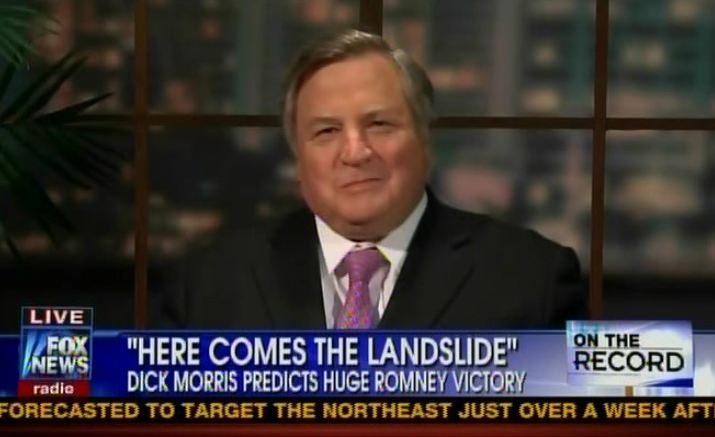
However, a completely different picture was painted in conservative media – at least in a few anecdotal instances. Fox News contributor Dick Morris infamously predicted a “landslide” victory for Mitt Romney, while Karl Rove’s refusal to accept Obama’s victory-sealing win in Ohio made for awkward Election Night coverage for the cable news ratings leader. Both had evidence on their side – poll numbers that made it look like Romney was indeed going to win Ohio and the White House. But those polls were in the minority, and they were wrong.
This matters. Previous research suggests that publishing of public opinion polls can actually influence public opinion, and eventually, voting. To be fair, these findings have always been tough to untangle. Does a poll showing a candidate with a big lead create a bandwagon effect where everyone wants to vote for the inevitable winner, or does it spur an underdog effect in which the losing candidate’s supporters mobilize to close the gap? Does depicting a close race boost turnout, while voters skip out on a projected blowout? There’s evidence of all of these. Continue reading “Sunday morning talk shows and portrayals of public opinion during the 2012 presidential campaign”
Mississippi’s Republican primary for U.S. Senate was not decided purely by Republican voters. While the specific number of “crossover” votes can be difficult to ascertain, the fact is that turnout in traditionally Democratic areas increased dramatically from the June 3 primary to the June 24 runoff (perk of all that national attention? Fantastic datajournalism). It’s also true that incumbent Sen. Thad Cochran’s campaign targeted those voters between his 2nd-place finish to Tea Party-backed challenger Chris McDaniel on June 3 and his victory on June 24.
AP/Politico
While legal in Mississippi, plenty will say that’s dirty politics. McDaniel certainly felt so. He refused to concede on election night, arguing that “the conservative movement took a backseat to liberal Democrats in Mississippi.”
“Before this race ends,” McDaniel said, “We have to be certain that the Republican primary was won by Republican voters.”
And while I felt McDaniel’s reality-defying non-concession speech only affirmed those who question the ability of ideologues to govern, I also felt a certain degree of sympathy. In the eyes of his supporters (and, to be fair, some of his detractors), his party’s nomination was stolen from him by people who wouldn’t consider themselves part of that party.
Primaries exist so that parties can select their nominee for a particular office. That used to be a decision left to party leaders (via conventions or caucuses), but because of a number of reasons – establishment-bias and corruption chief among them – popular votes through primary elections have become the nominating mechanism of choice. Because of their purpose, many states have closed primaries, meaning that the only people allowed to vote in a party primary are registered members of that party. “Semi-closed” primaries also allow for non-affiliated voters (independents) to participate. (A handy map of state primary rules is available here.)
Mississippi’s primaries are open, meaning that with each new election cycle, voters can choose anew which party’s primary they wish to vote in, regardless of personal political affiliation. In the case of the Cochran-McDaniel runoff, anyone who voted in the Democratic primary on June 3 was ineligible to vote in the Republican runoff (they already made their choice this cycle). But everyone else, including registered Democrats who stayed home on June 3, could participate.
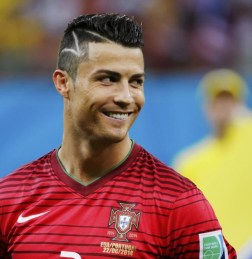
Cristiano Ronaldo is confident you don’t want to play against him. // Jorge Silva, Reuters
Political scientists question just how often open primaries lead to strategic voting, and whether the effect is anything but marginal (see references below). Even the notion that open primaries moderate candidate choice – the reason many states adopted them – doesn’t have much empirical support. But on its face, it doesn’t quite jive with the intent of a primary. To use a timely, though imperfect illustration, imagine if World Cup rosters were selected by the rest of the world, including fans of opposing teams that also want to win. Would Americans want Cristiano Ronaldo to be part of the Portuguese squad? Would anyone other than the Portuguese? Probably not. Fortunately, only a coach with firm ties to Portugal selects that nation’s team, and he wants to field the best players possible.
It’s election day again in Mississippi, where the nation’s most interesting midterm race heads for a runoff. The contest between Thad Cochran and Chris McDaniel matches a 41-year Capitol Hill veteran who brings home pork for the poorest state in the union against a 41-year-old Tea Party conservative riding the wave of anti-government, anti-establishment, anti-Obama sentiment.
National political reporters have had their eye on Mississippi for a few weeks now, producing some interesting reads. I enjoyed BuzzFeed’s investigative reporting in the digital age, connecting dots between McDaniel’s campaign, a blogger who broke into Cochran’s wife’s nursing home, and Wikipedia edits. The Washington Post explored the popularity of Tea Party fiscal conservatives in states that benefit most from liberal federal spending. The Upshot, essentially the New York Times’ Nate Silver-less FiveThirtyEight, used Mississippi as a case study for what extremely partisan electorates do to the election process.
This blog post is not about any of that, really. It’s more of an aside from the primary three weeks ago, and it has to do with language. More specifically, language in the Twitter age.
Entitled “Four Years of Hope and Change,” you get dramatic visuals and music – a greatest hits of Barack Obama’s first term as president. Well, if you didn’t like the guy, anyway.
The facts seem to be fine from a cursory glance. It would be an excellent creation of the Romney campaign or some political action committee. Thing is, it wasn’t a creation of a blatant activist group. It was produced by Fox News and ran multiple times Wednesday on its morning infotainment program Fox & Friends.



 dylan mclemore